


Arizona’s incorporation process includes a few state-specific requirements that are easy to miss. After approval, the Arizona Corporation Commission (ACC) will tell you whether it will publish your formation information in its public database or whether you must arrange newspaper publication within 60 days. Our guide covers what else to expect as you form your corporation in Arizona, plus state-specific rules and requirements.
How to form an Arizona corporation at a glance
- File articles of incorporation, a cover sheet, and a certificate of disclosure with the Arizona Corporation Commission.
- Every Arizona corporation must appoint a statutory agent with a physical street address in the state before filing.
- After approval, follow the ACC’s publication instructions. The ACC generally publishes formation information for corporations with a known place of business in Maricopa or Pima County; corporations in other counties may need to arrange newspaper publication within 60 days.
- Arizona corporations must file annual reports with the ACC each year to stay in good standing.
- You can file online through the ACC's business filing portal or by mail to the Corporations Division.

What you need before you file
Arizona’s for-profit corporation filing package includes the articles of incorporation, certificate of disclosure, cover sheet, and statutory agent acceptance when required. The forms request information about the corporation’s initial business, authorized shares, known place of business, directors, incorporators, statutory agent, and required disclosures.
This guide covers domestic for-profit corporations only. An existing corporation formed in another state generally applies for authority to transact business in Arizona instead. Arizona nonprofits follow separate formation and governance rules.
Note: For-profit and nonprofit corporations use different versions of the same form, with the entity type clearly listed in the form title. Make sure you file the correct form.
Have the following ready before you start:
- Your proposed corporation name, plus a backup in case it's taken
- The name and Arizona street address of your statutory agent
- Names and addresses of each incorporator and initial director
- The number of shares your corporation is authorized to issue
- The criminal, court-action, bankruptcy, and receivership information requested by the certificate of disclosure
Arizona corporation naming rules and how to search for name availability
Arizona law requires every for-profit corporation name to include a designator such as "association," "bank," "company," "corporation," "limited," or "incorporated," or an accepted abbreviation like "Corp.," "Inc.," or "Co." The name also has to be distinguishable from any other entity or trade name already on file with the ACC.
Even if the ACC approves your name, a similar name may already be protected by a federal trademark. For a deep dive on how to find and protect a business name, read our comprehensive guide to Arizona business names.
Free Arizona Business Name Check
Starting a business? Use our free name check tool to check your business name against the Arizona Corporation Commission records.
By clicking "Check Availability," I agree to LegalZoom's Terms of Use. This search is a preliminary check of state databases and does not include variations or trademarks. Results do not guarantee name availability or compliance with legal requirements.
Reserving the name isn't required, but the ACC offers a name reservation option if you want to lock in your choice while preparing documents. The reservation fee is $10 and holds the name for 120 days.
Arizona statutory agent requirements for corporations
Every Arizona corporation must designate a statutory agent before filing, what most other states call a "registered agent." A statutory agent accepts service of process and other legal documents on your corporation’s behalf. This requirement is a legal obligation, not optional housekeeping.
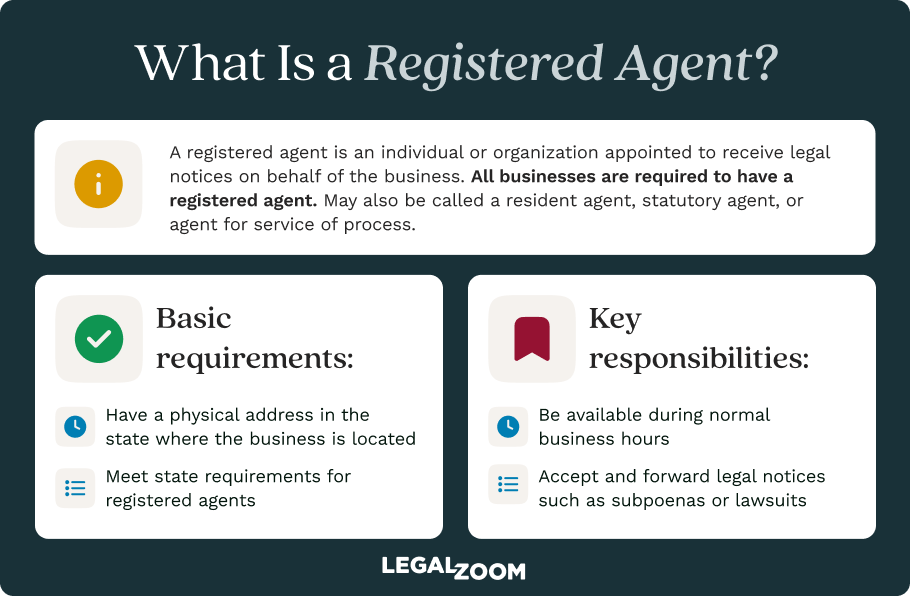
Arizona requires the following:
- Individual agents must be at least 18 and reside in Arizona.
- An eligible entity agent may be an Arizona corporation or LLC, or a foreign corporation or LLC authorized to transact business in Arizona.
- The agent must have a physical street address in Arizona. A P.O. box alone doesn't satisfy the requirement.
- The agent must formally accept the designation, through the ACC's online dashboard if filing online, or via a separate acceptance form if filing by paper.
You can serve as your own statutory agent if you meet Arizona’s eligibility requirements. Because the agent’s name and street address become part of the public filing, consider availability and privacy before taking the role yourself. Arizona’s statutory agent requirements are an ongoing compliance obligation, so update the ACC promptly if the agent or address changes at any time after formation.
How to file your Arizona corporation with the ACC
Before you file, make sure your business name, statutory agent, share structure, and required disclosures are all in order so the Arizona Corporation Commission can process your application without unnecessary delays.
Step 1: Choose and clear your Arizona corporation name
Search the ACC's online business entity search tool to confirm your proposed name is available and meets Arizona's designator requirements. To lock in the name while you prepare documents, file a name reservation through the ACC's filing portal. The fee is $10 and holds your name for 120 days.
Step 2: Appoint your Arizona statutory agent
Confirm your agent meets Arizona’s requirements. Your agent must be an individual who is at least 18 and resides in Arizona, or an entity agent which must be an eligible Arizona entity or an authorized foreign corporation or LLC. The agent needs a physical Arizona street address and must accept the appointment. Get the agent’s consent and exact legal information before completing the forms.
Step 3: Prepare your Arizona articles of incorporation
The articles of incorporation is the primary formation document. You'll need to supply:
- Your corporation name
- A brief statement of the business you initially plan to conduct
- Your known place of business, if different from the statutory agent’s address
- Your statutory agent’s name, Arizona street address, and acceptance
- The total number of shares the corporation is authorized to issue, plus any required class or series details
- The name and address of each incorporator
- The name and address of each initial director
Use the ACC website’s current corporation forms and instructions rather than an older saved copy or a PDF from a third-party site.
Step 4: Complete the certificate of disclosure
The certificate of disclosure must be filed simultaneously with your articles of incorporation. Submit the articles without it and the filing will be rejected.
The certificate of disclosure asks for different information depending on the person and the type of disclosure. Certain criminal convictions, injunctions, and judgments must be reported for officers, directors, trustees, incorporators, and people who control or hold more than 10% of the corporation’s issued and outstanding shares. Bankruptcy and receivership disclosures use a separate 20% ownership threshold. The form must be dated within 30 days of delivery to the ACC.
Step 5: Attach the required cover sheet
The cover sheet is required for every ACC filing. Download the current cover sheet from the corporation forms page and complete it before assembling your filing package.
Step 6: File online or by mail with the Arizona Corporation Commission
With the filing package complete, submit through one of two methods:
- Online: Through the ACC's business filing portal at azcc.gov. This is generally the faster option.
- By mail or fax: Use the contact information listed at the bottom of the PDF form downloaded from the ACC website.
The base filing fee is $60. Expedited processing is available for an additional fee. Online users must also complete the Arizona Business Center’s identity verification process when creating or verifying an account.
Arizona corporation filing fees and processing times
The base filing fee for the articles of incorporation is $60.00. Expedited tiers are available at additional cost. All ACC filing fees are nonrefundable.
| Service level | Additional fee | Processing timeline |
|---|---|---|
| Standard | $0 | Approximately 14–16 business days |
| Expedited | $35.00 | Approximately 3–5 business days |
| Next day service | $100.00 | Processed by 5 p.m. the next business day (must be received before 5 p.m.) |
| Same day service | $200.00 | Processed by 5 p.m. the same business day (must be received before 10 a.m.) |
| Two-hour service | $400.00 | Processed within two hours of receipt (available 8 a.m.–3 p.m.) |
Paying for accelerated service guarantees examination within the specified timeframe, not necessarily final approval. A fee paid for one document can't be applied to a different document. Check azcc.gov for current processing estimates before choosing a service tier.
Arizona's publication requirement: What you must do after approval
Arizona imposes a post-approval publication requirement that most other states don't have. Missing it puts your corporation's good standing at risk.
What the publication requirement is
Within 60 days after approval, Arizona law requires either newspaper publication or publication by the ACC in its public database. Your approval letter will state which method applies. When newspaper publication is required, use a qualifying newspaper in the county of the corporation’s known place of business and follow the notice instructions provided by the ACC. If you’re unsure whether a newspaper qualifies, reach out to the newspaper or use the approved newspaper list located in the ACC’s business services FAQs page (located under “General Questions”).
Who actually has to publish
The ACC itself generally publishes approved formation information for corporations whose known place of business is in Maricopa or Pima County. Corporations with a known place of business in another county are generally instructed to publish through a qualifying newspaper. Rely on the instructions in your approval letter rather than assuming.
How to complete the publication requirement
- Receive your notice of publication. After formation, the ACC will send you a blank Notice for Publication form to bring to an approved newspaper.
- Complete the notice form. Fill in the required details exactly as they appear in your approved articles, including your corporation name, ACC file number, and the names and addresses of your directors and officers.
- Choose a qualifying newspaper. The ACC provides a list of qualifying newspapers for counties where newspaper publication is required. Select one in the county of the corporation’s known place of business.
- Run the notice as directed. The notice is generally published for three consecutive publications, but follow the approval letter and the qualifying newspaper’s schedule.
- Obtain your affidavit of publication. After the notice runs, the newspaper will provide an Affidavit of Publication as proof of compliance.
- Retain your affidavit. Keep it in your corporate records. You can also upload it through the ACC's eCorp system.
What happens if you don't publish
Failure to complete required publication can become grounds for administrative dissolution. Before starting that process, the ACC must notify the corporation and provide an additional opportunity to submit proof of publication. Newspaper rates vary, so request written quotes from qualifying publications and retain the affidavit in your corporate records.
What to do after your Arizona corporation is approved
Approval creates your corporation, but several practical and compliance tasks still remain. Completing them early helps establish the business properly, maintain good standing, and prepare the corporation to operate.
Maintain corporate records
You’ll want to get this right from the very beginning. Arizona law requires you to keep the following records internally:
- Meeting minutes
- Accounting records
- A list of members
- Articles of incorporation
- Bylaws
- Board resolutions
- Written communications to members
- A list of current directors and officers
- Most recent annual report
Obtain an EIN, adopt bylaws, and hold your organizational meeting
An employer identification number is the corporation’s federal tax identification number and is commonly needed to open a business bank account, hire employees, and file federal taxes. You can apply for an EIN for free through the IRS.
Corporate bylaws govern how directors are elected, meetings are conducted, and decisions are approved. Arizona corporations keep them with their internal records rather than filing them with the ACC.
You’ll also need to hold your organizational meeting. This first formal meeting of your directors is where you adopt bylaws, elect officers, authorize a bank account, and handle other initial business. Document everything in meeting minutes and store them with your corporate records.
Elect S corporation tax status if applicable
Forming an Arizona corporation automatically makes it a C corporation for federal tax purposes. The corporation pays its own income tax, and shareholders also pay tax on dividends. To avoid double taxation, qualifying corporations sometimes elect S corporation status with the IRS.
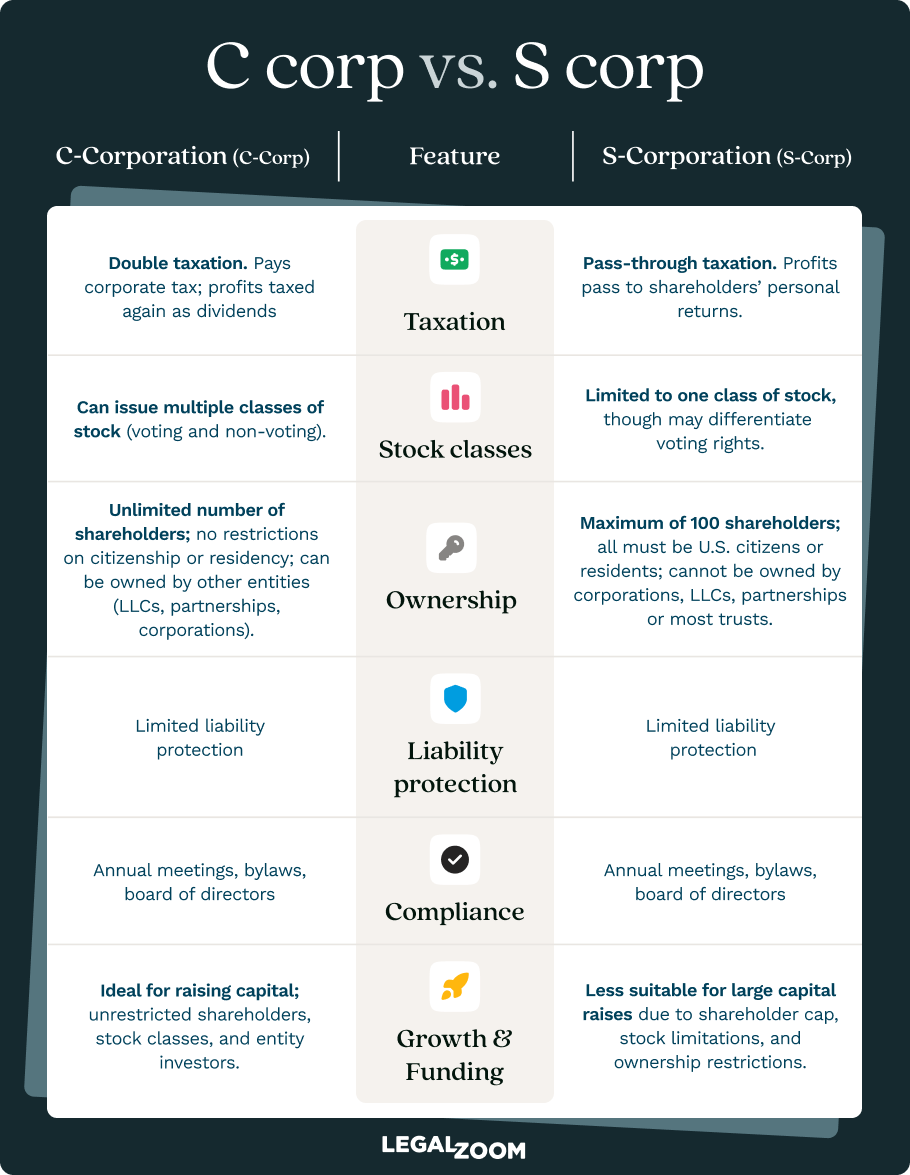
An S corporation election is a federal tax classification, not a separate Arizona entity filing. Eligible corporations make the election by filing IRS Form 2553 after formation. Filing deadlines and shareholder restrictions apply, so review the current IRS instructions and consult a tax professional when needed.
File your Arizona corporation's annual report with the ACC
All Arizona corporations must file an annual report with the ACC each year to maintain good standing. The report provides current information about officers, directors, business address, and the statutory agent. Along with the annual report, corporations must also submit a certificate of disclosure each year, the same type of disclosure required at formation.
Annual reports are submitted through the ACC’s online filing system. Missing the deadline can lead to penalties and administrative dissolution, which limits the corporation’s ability to conduct ordinary business. Properly dissolving an Arizona business is a separate process from allowing the corporation to become inactive.
The current for-profit corporation annual report fee is $45. The due date is assigned to the corporation and appears in its ACC business record, so confirm the date and any available extension options before the deadline.
Arizona corporation vs. Arizona LLC: Which structure is right for you?
Both an Arizona corporation and an Arizona LLC file with the Arizona Corporation Commission, but the similarities largely end there.
| Arizona Corporation | Arizona LLC | |
|---|---|---|
| Formation documents | Articles of incorporation, certificate of disclosure, cover sheet | Articles of organization, cover sheet |
| Base state filing fee | $60.00 | $50.00 |
| Taxation default | C corporation (entity-level tax + shareholder tax on dividends) | Pass-through (members taxed at individual level) |
| Governance formality | Directors, officers, bylaws, annual meeting minutes required | Flexible; governed by operating agreement |
| Investment readiness | Can issue multiple classes of stock; preferred by investors and venture capital | Generally limited to single class of membership interests |
| Annual filing | Annual report + certificate of disclosure ($45 currently) | No annual report required |
| Publication requirement | Required outside Maricopa and Pima counties | Not required |
An Arizona LLC may be a better fit when flexible management and fewer annual formalities matter more than issuing stock or attracting institutional investors.
Common Arizona corporation filing mistakes to avoid
Small filing errors can delay approval or cause the ACC to reject your submission. Reviewing the most common issues before you file can help you catch problems early and avoid having to correct and resubmit your documents.
- Omitting the cover sheet. Forgetting it is one of the most common reasons a filing gets rejected. Pull the form from the ACC's website and complete it before assembling your packet.
- Submitting an incomplete or outdated certificate of disclosure. A certificate missing signatures, lacking required disclosure answers, or dated more than 30 days before delivery to the ACC will cause rejection.
- Choosing a name that doesn't meet ACC requirements. A name lacking a required designator or indistinguishable from an existing entity won't be accepted. Search the ACC's database and confirm naming compliance before you file.
- Listing a statutory agent without a physical Arizona street address. Your agent must have a physical street address in Arizona, appearing in your articles exactly as confirmed with your agent.
- Missing the post-approval publication deadline. If the ACC instructs you to publish in a newspaper, complete the process within 60 days after approval and retain the affidavit. Mark the deadline when the approval letter arrives.
Use the ACC’s current forms and filing instructions before submitting, especially when relying on saved forms or third-party checklists.
FAQs about forming an Arizona corporation
How long does it take to form a corporation in Arizona?
Standard processing takes approximately 14–16 business days. Expedited tiers are available: 3-5 business days for an additional $35; Next Day Service for an additional $100; Same Day Service for an additional $200; Two-Hour Service for an additional $400. Check the ACC’s processing information for current estimates.
How much does it cost to form a corporation in Arizona?
The base filing fee is $60 for standard processing, which the ACC currently estimates at approximately 14–16 business days. Expedited tiers range from an additional $35 to $400, and ACC fees are nonrefundable. Also budget for newspaper publication if the approval letter requires it and a $45 annual report fee after formation.
What do I need to file for an S corp in Arizona?
S corporation status is a federal tax election made with the IRS after your Arizona corporation is formed, not a separate Arizona filing. File IRS Form 2553 directly with the IRS. Arizona automatically conforms to the federal S corporation election for state income tax purposes. Eligibility requirements apply, including limits on the number and type of shareholders, so consult a tax professional before filing.
Can I form a professional corporation in Arizona?
Arizona recognizes professional corporations for licensed professionals such as doctors, lawyers, architects, and dentists. Share ownership is restricted to individuals licensed in the profession the corporation was formed to practice, governed by A.R.S. sections 10-2201 through 10-2249. The standard for-profit articles of incorporation form is used for professional corporations as well. Confirm the ownership and filing requirements with the regulatory board that issued your professional license before filing.
Do I need a business license after forming my Arizona corporation?
Arizona has no statewide general business license requirement, but your corporation may still need licenses to operate. Certain industries and locations are subject to city, state, or federal licensing requirements. Some Arizona cities, including Phoenix, Tucson, and Scottsdale, have separate local business license or TPT registration requirements. Forming your corporation with the ACC establishes your legal entity but doesn't substitute for industry-specific permits or local licenses. Contact your city or county government and the Arizona tax department to confirm what applies to your situation.
'%20/%3e%3c/svg%3e)

'%3e%3cpath%20fill-rule='evenodd'%20clip-rule='evenodd'%20d='M9.31239%2025.5316H13.0679V14.1032H9.31239V25.5316ZM11.1913%208.46875C9.93945%208.46875%209%209.25086%209%2010.505C9%2011.5995%209.78211%2012.5389%2011.1913%2012.5389C12.6005%2012.5389%2013.3826%2011.5995%2013.3826%2010.505C13.3826%209.4082%2012.6005%208.46875%2011.1913%208.46875ZM27%2018.9577V25.5316H23.2445V19.4275C23.2445%2017.8609%2022.6174%2016.7664%2021.3679%2016.7664C20.2711%2016.7664%2019.644%2017.5463%2019.3316%2018.1756C19.1743%2018.488%2019.1743%2018.8004%2019.1743%2019.1128V25.5316H15.4165V13.9458H19.1743V15.5123C19.644%2014.7302%2020.5835%2013.6357%2022.6174%2013.6357C25.1234%2013.7908%2027%2015.3573%2027%2018.9577Z'%20fill='white'/%3e%3c/g%3e%3cdefs%3e%3cclipPath%20id='clip0_952_9489'%3e%3crect%20width='18'%20height='18'%20fill='white'%20transform='translate(9%208)'/%3e%3c/clipPath%3e%3c/defs%3e%3c/svg%3e)